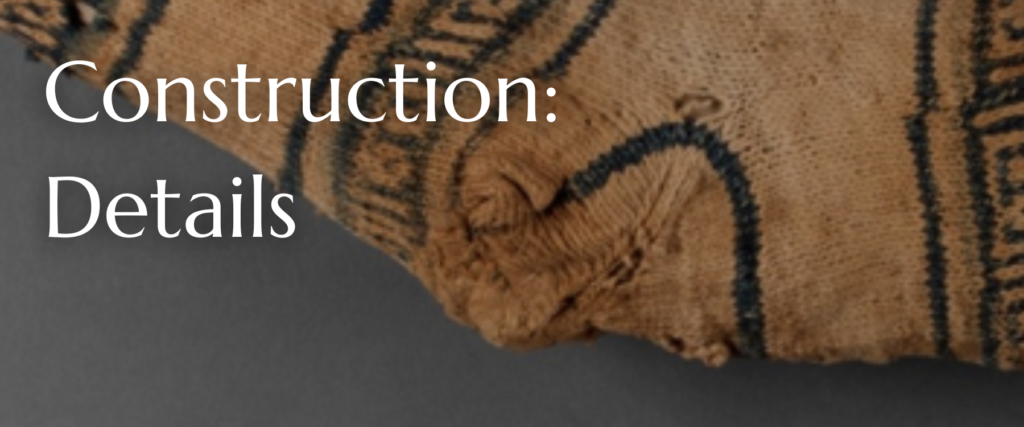
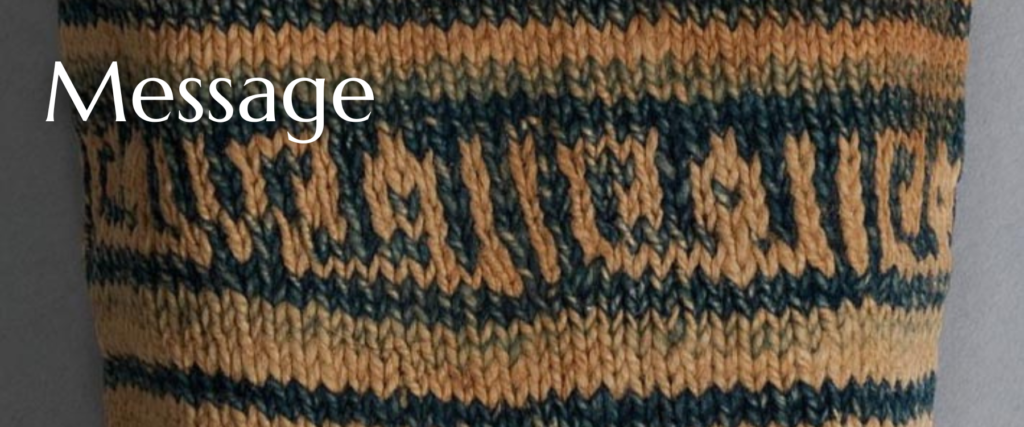
This sock is knit in three colors: light brown, light blue, and dark blue.
While it is hard to know what color the light brown would have originally been due to aging, it was likely closer to white, based on the coloration of other socks that are less discolored. Blue and white were also the colors most commonly worn by Egyptians during the Fatimid period, when this sock may have been made.1
The light blue and dark blue are likely both dyed with indigo, just dyed for different lengths of time to achieve different levels of intensity. Indigo was the only source of blue for centuries in Egypt and has been used at least since the Eighteenth Dynasty (c. 1550-1070 BCE) and possibly as early as the Fifth Dynasty (c. 2400 BCE). The earliest fragments of blue-dyed linen found in graves have been dated to the Fifth Dynasty, and were most likely dyed with some sort of indigo-bearing plant, especially since indigo dye stays blue as it ages; however the earliest garments that have been scientifically tested for indigotin (the primary compound in indigo dye) are from the Eighteenth Dynasty.2 Indigo’s resistance to fading with age or light also supports the theory that this sock uses indigo-dyed cotton, because the blues remain vibrant, despite the discoloration of the overall item. The only way that indigo naturally fades without interference from other substances is from the fabric creasing, because when it bends, it releases a little bit of dye.3
To the right and below are two examples of textiles from Egypt in the Met’s collection that were most likely dyed with indigo. The textile below is much simpler, with just bands of colored text against a plain background. The textile to the right is much more elaborate and uses multiple shades of blue, much like the sock.
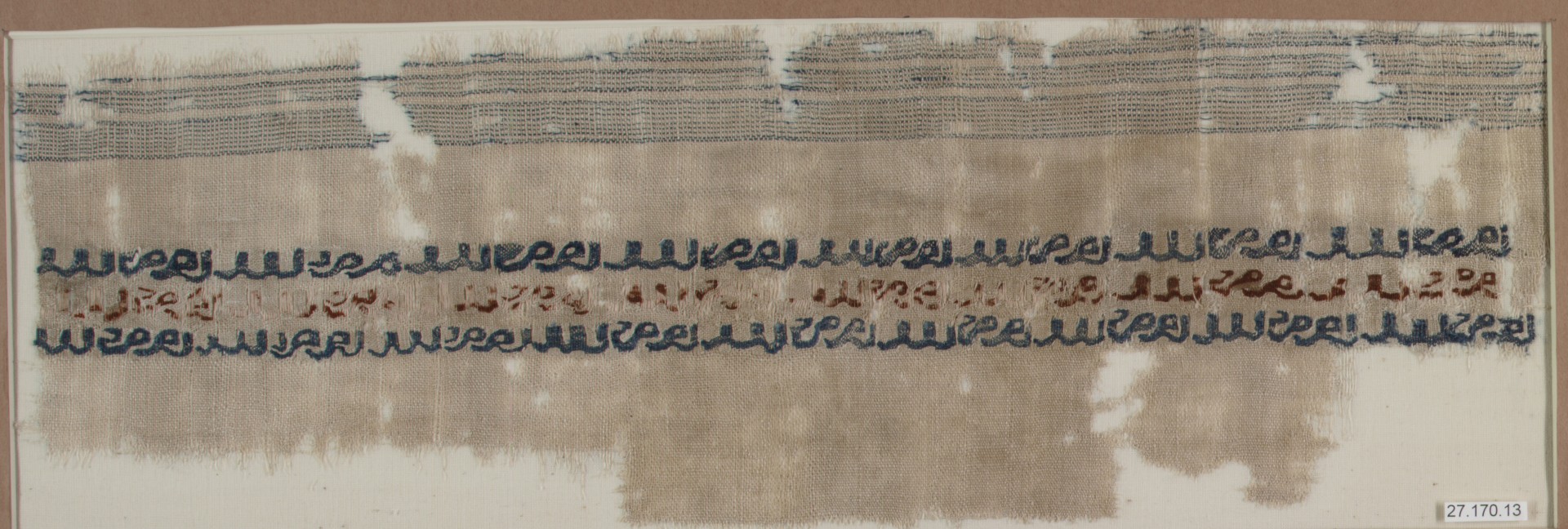
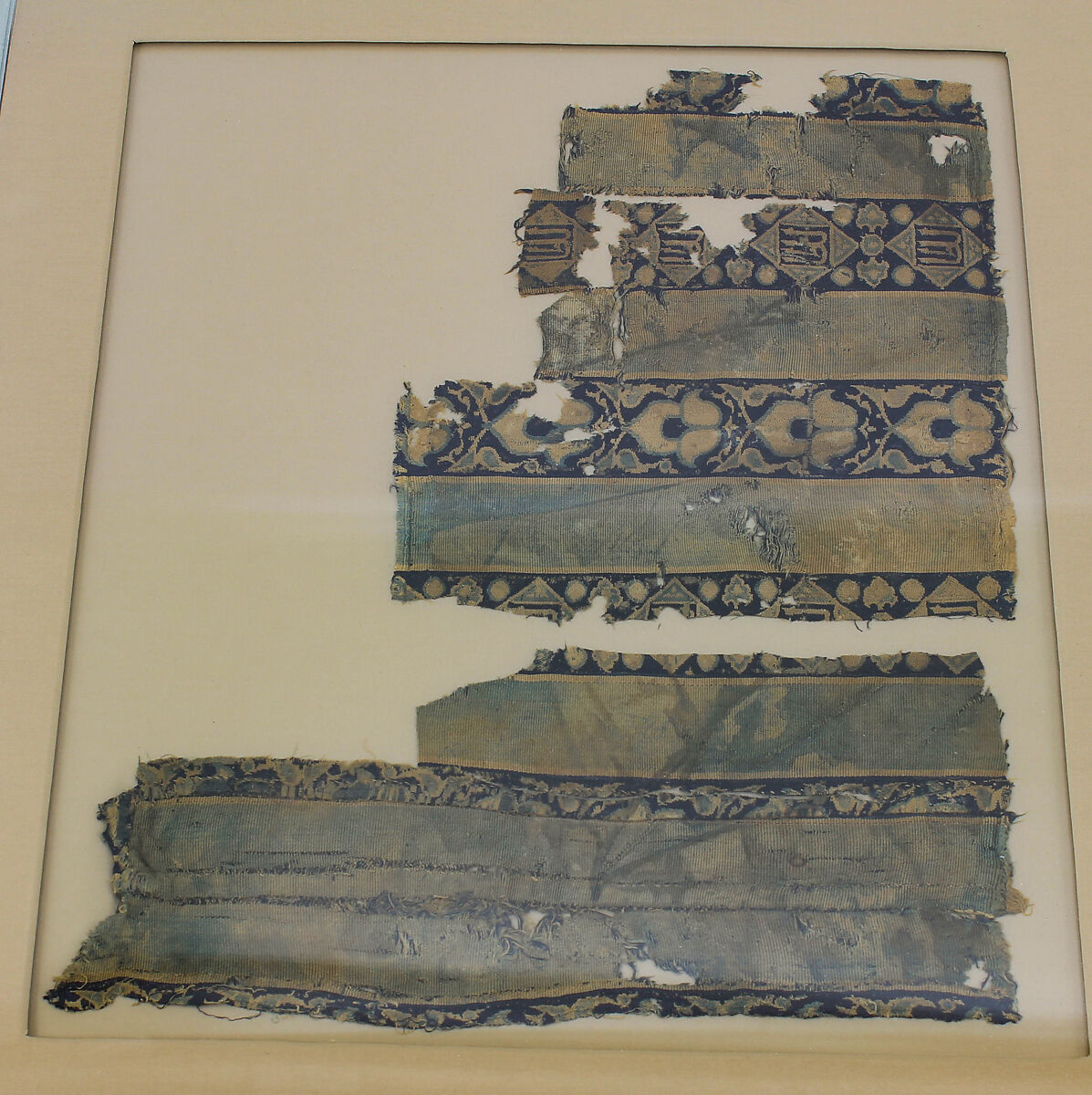
Indigo dye in Egypt came primarily from two kinds of plants: Isatis tinctoria L. (woad) and Indigofera. Dyers in Pharaonic Egypt used indigenous woad to make blue, and Indigofera may have also grown locally or already started to be imported from India or other parts of Africa.4 By the first centuries of the first millennium CE, Egyptians would have been familiar with Indigofera as well, since they were a hub for trade between Europe, where woad is also native, and India and other parts of Africa, which did significant trade in their native Indigofera.5 Indigofera is highly preferred to woad, and appropriately priced, because it results in a deeper blue with less compound needing to be added.
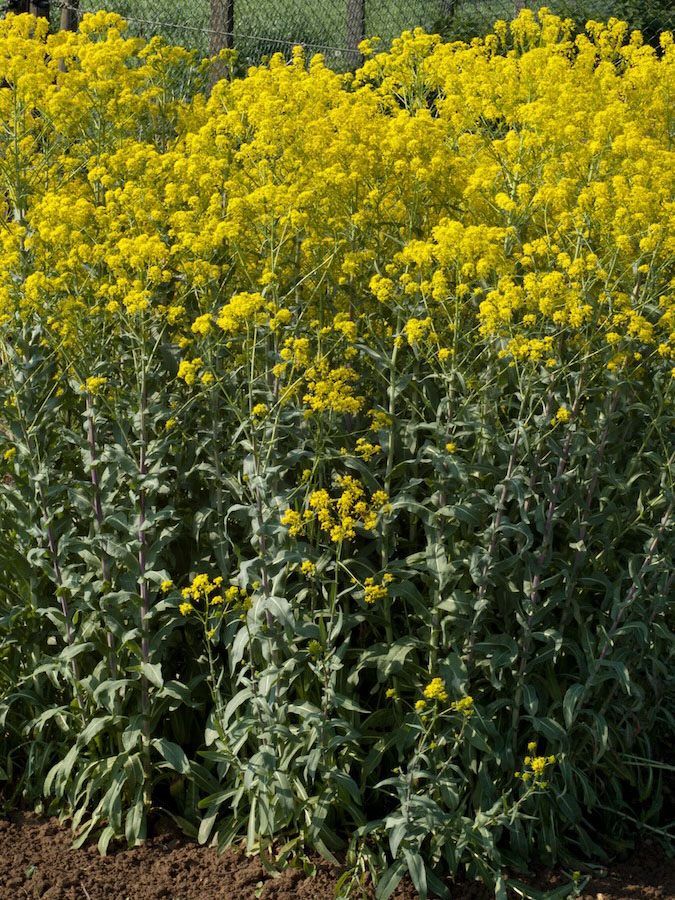

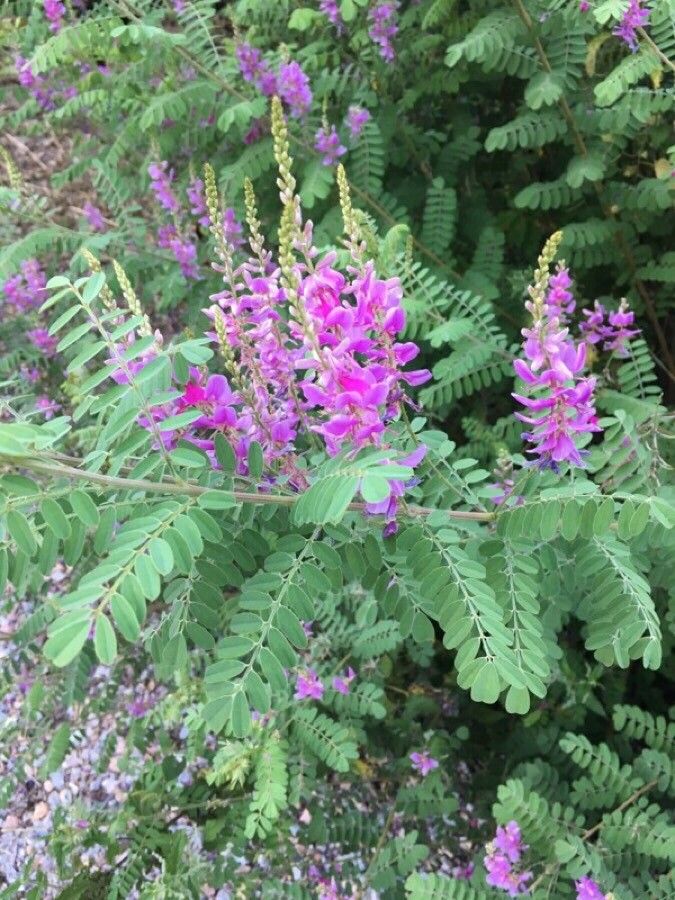
Indigo dyeing is part of cultural traditions in many parts of the world, where it seems to have developed separately, although no one is quite sure how. Indigo is the most commonly-worn dye in the world,6 and during the medieval period it was one of the most common dyes traded in the Mediterranean world, along with brazilwood.7 There has been much less scholarship that focuses specifically on indigo-dyed cotton (and even less on wool) than indigo-dyed linen in the Egyptian context, but cotton and linen interact with indigo in the same way because they are both cellulose fibers rather than protein fibers, like silk and wool.
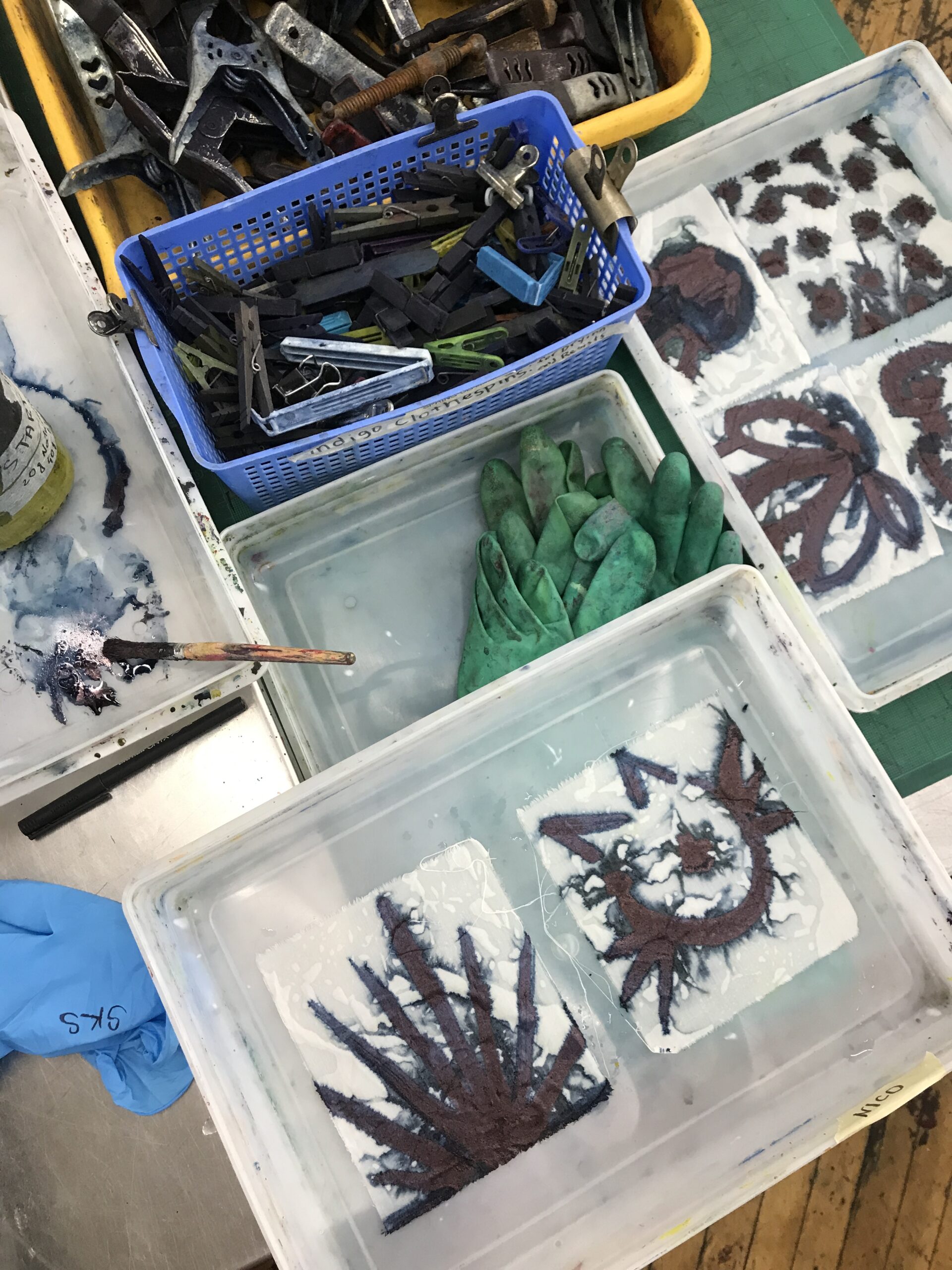
During the course of research for this project, I had the good fortune to attend an indigo dyeing workshop led by Hannah Schultz at the Textile Arts Center in Brooklyn, New York. We learned about different kinds of vats that can be used to dye indigo; indigotin is non-soluble, so it needs to be reduced to a water soluble form by adding an antioxidant reducing agent and an alkali base. Different options are better suited for different fabrics: a mix of fructose and calcium hydroxide works well for all kinds of fibers whereas a mix of iron sulfate and calcium hydroxide doesn’t work well for protein fibers because it is more abrasive.
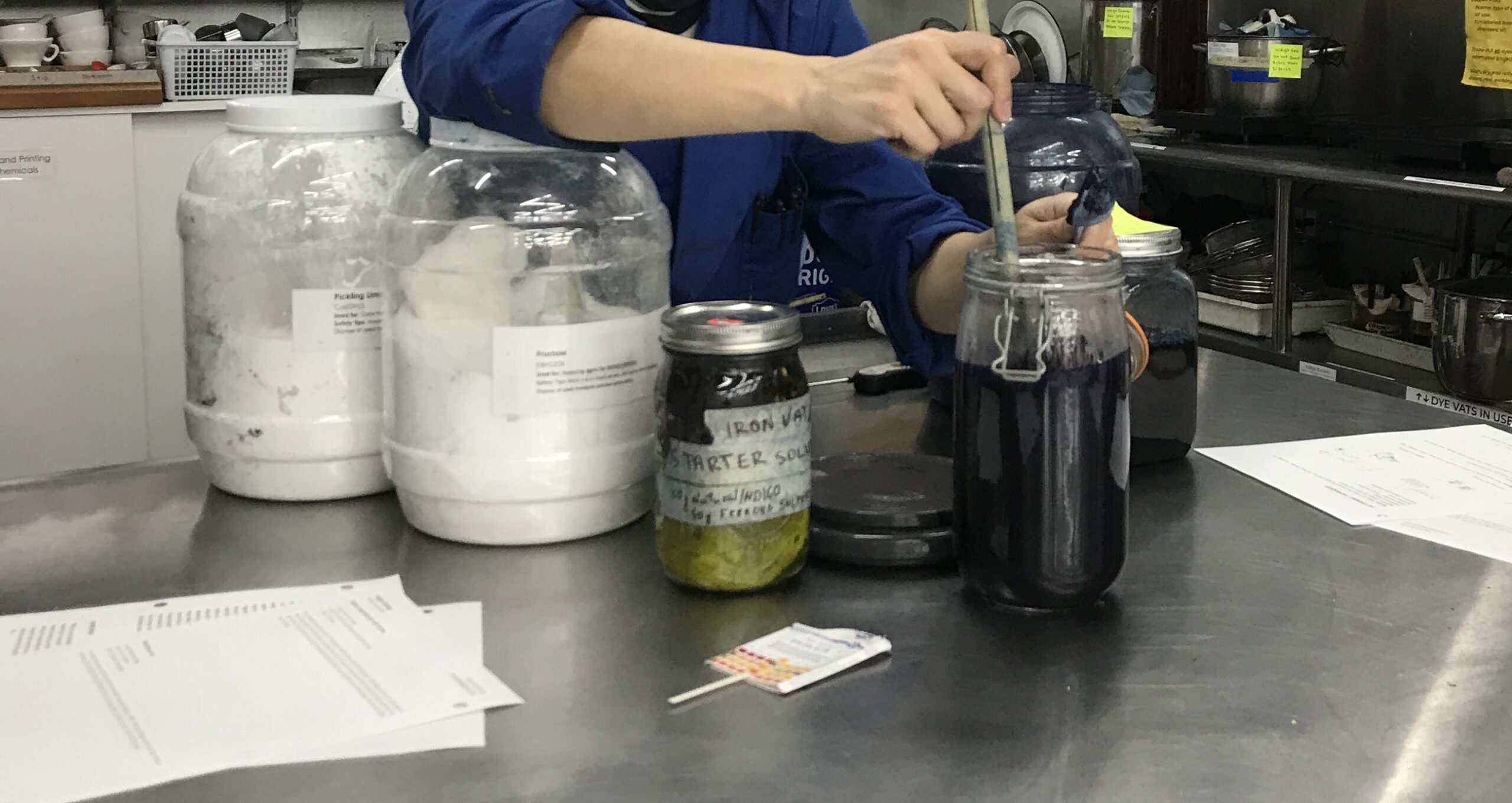
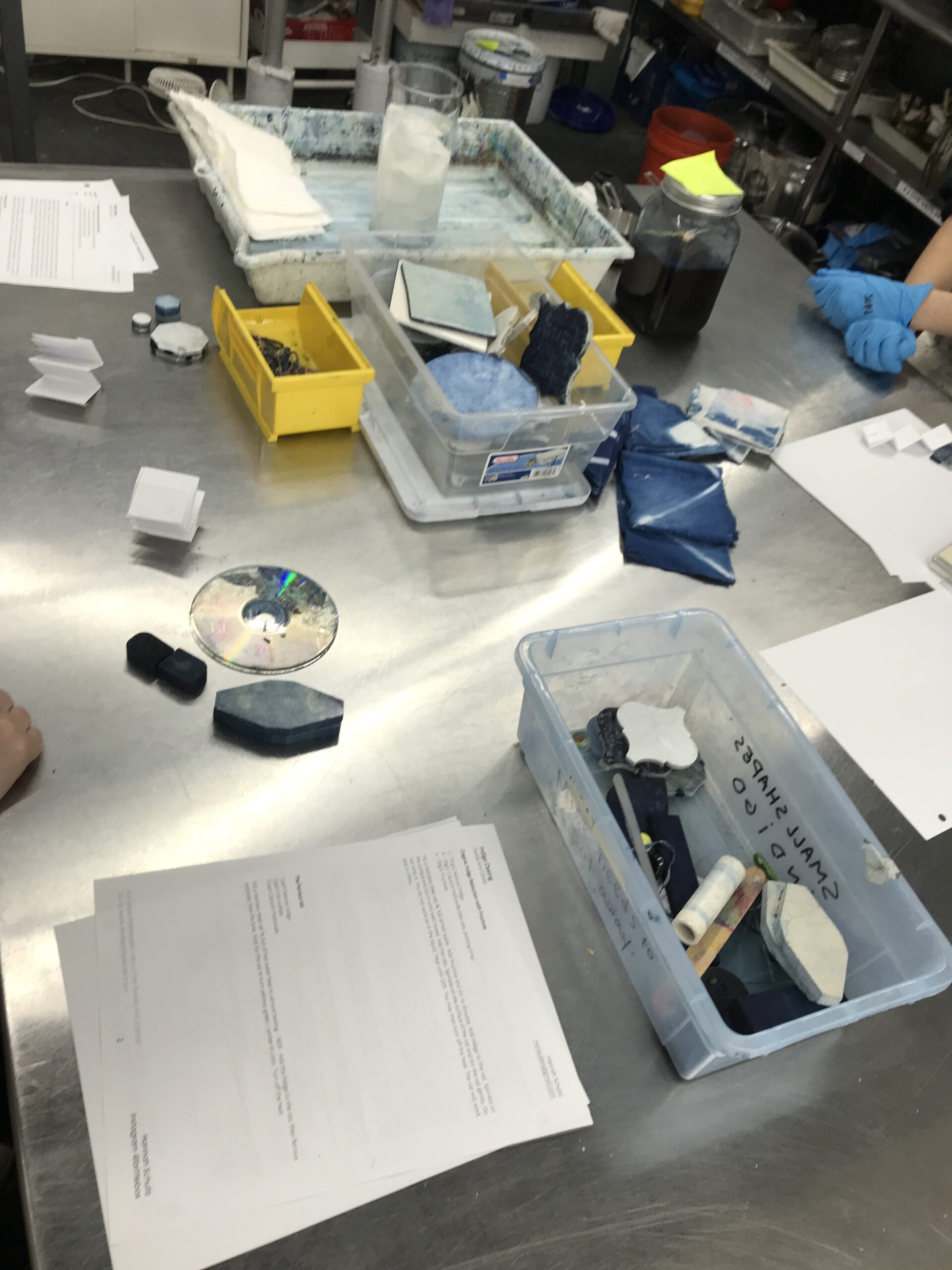
With our dye vats, we experimented with different basic methods of creating patterns with indigo on squares of cotton fabric. Not having vast experience in dyeing, my results were somewhat mixed as compared to what I was trying to create. Below are some images of the workshop.
Footnotes
- Jenny Balfour-Paul, Indigo in the Arab World (Richmond: Curzon Press, 1997), 18-19.
- Balfour-Paul, Arab World, 8-9.
- Hannah Schultz, indigo workshop at the Textile Arts Center in Brooklyn, NY, March 30, 2023.
- Dominique Cardon, Natural Dyes (London: Archetype Publications, 2007), 335; Balfour-Paul, Arab World, 9.
- Balfour-Paul, Arab World, 10.
- Cardon, Natural Dyes, 335.
- Balfour-Paul, Arab World, 21.
Further Reading Suggestions
If you are interested in how indigo usage continued to develop in the Arab World after this point, Jenny Balfour-Paul’s Indigo in the Arab World covers this topic in depth.
If you are interested in more contemporary indigo practices (including synthetic indigo, which I have not discussed here as it was not available in medieval Egypt), Catherine Legrand’s coffee table volume Indigo: The Colour that Changed the World devotes individual chapters to contemporary continuations of traditions in Europe, Japan, China, Laos and Vietnam, India, Africa, and Central America.
If you want to have a try at dyeing with indigo yourself, textile art supply store Maiwa has a succinct guide on different methods, embedded below. You can also order supplies from Maiwa and sign up for their online workshop, or see what dyeing workshops might be offered near you!